

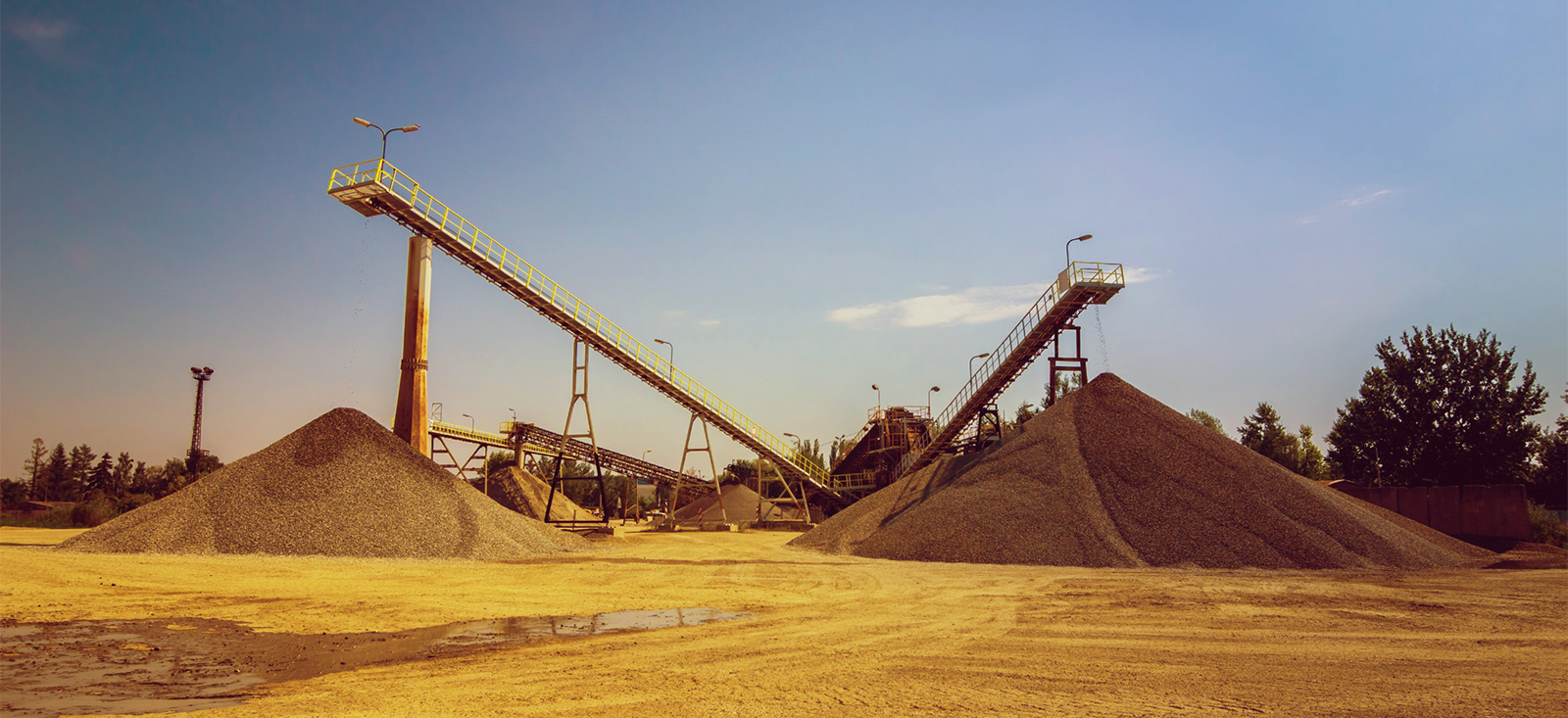
The mining industry consumes a large amount of water for: ore washing and flotation.separating useful minerals and unwanted gangue. Many minerals such as iron, coal, phosphate, diamond, zinc, uranium, sand, etc. use this process.
The following table is some of the main application examples.
| SUSPENSION | CLARIFICATION | WASTEWATER TREATMENT | CLARIFICATION AFTER ACID DISSOLUTION | CONCENTRATION | SEDIMENTATION FILTRATION | |
| ALUMINUM | √ | √ | √ | √ | √ | |
| CALCIUM CARBONATE | √ | |||||
| CLAY | √ | |||||
| COAL | √ | |||||
| COPPER | ||||||
| NICKEL | √ | |||||
| PHOSPHATE | √ | |||||
| SAND MINING | √ | |||||
| SILVER | √ | |||||
| TITANIUM DIOXIDE | √ | |||||
| URANIUM | √ | |||||
| ZINC | √ |
MINERAL SPHEROIDIZED BINDER:
With the help of a flocculant, fine wet mineral particles are rolled in a pelletizer and bonded in to pellets. Green's product emulsion EM-9 series is used for this purpose.
Dispersion: A mineral such as clay, calcium carbonate or titanium dioxide is suspended in water with a low molecular weight,high anionic flocculant, or sent to a grinding.

Copyright © 2026 PT PRATAMA VALVE INDO